

Djurgårdsvägen 60, Stockholm
Det sociala museet och konstens organisering
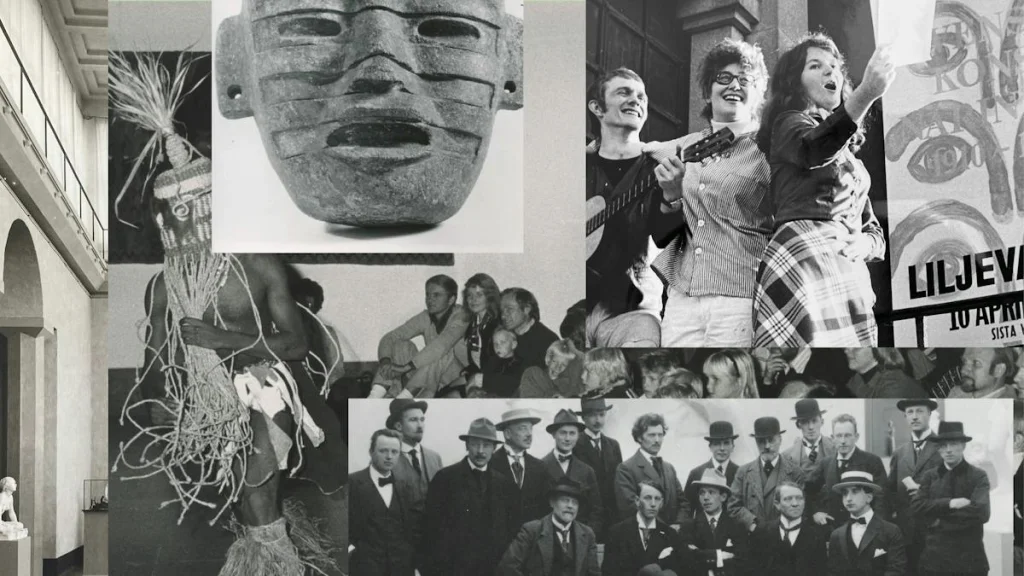
What does the Liljevalchs archive tell us about the art and society that have occupied the art gallery for more than a century?
To mark Liljevalchs’ 110th anniversary, we have invited artist Ingela Johansson to curate a two-part programme, in which she delves into the art gallery’s history.
Ingela Johansson is known for her incisive archival work and for an artistic practice that explores how Sweden is connected to the world. Here, she takes a closer look at how Liljevalchs has shaped ideas about art, which forms of expression have been given space, and how the art gallery’s activities have been influenced by their times. The archive becomes a resource for examining the institution’s changes, contradictions and blind spots.
Liljevalchs is a ‘house for artists’ that grew out of a vision to strengthen the art scene at a time when there were few public spaces for art. What was then considered important in Western contemporary art was given a central place in a monumental architectural building. At the same time, exhibition spaces were made possible for traditional practices such as handicrafts and design: the popular trade union and association movement was able to represent its members, and art was considered educational.
For more than a century, Liljevalchs’ programme has moved in a natural pendulum swing between the local, everyday life and the world’s art scenes. The art gallery has reflected social phenomena, commercial aspects of art and political structures. These issues came particularly to the fore during the women’s liberation struggle, with widely discussed exhibitions on women’s history. In an extensive archival investigation, Ingela Johansson has looked back at Liljevalchs’ history and asked what the art gallery’s broad range of art has meant.
Over two public discussion evenings with invited guests, we will explore aspects of her investigation. This is the first part, subtitled Ett eget rum för konst.
Del 1: Ett eget rum för konst
Participants: Ingela Johansson, artist and curator of the programme; Joanna Zawieja, architect and curator; Pella Myrstener, PhD in art history. The moderator is Corina Oprea, curator and head of public engagement and communications at Liljevalchs.
18.00 Introduction by Corina Oprea, followed by a lecture by Ingela Johansson, which moves from the art gallery’s establishment, through the Second World War and into the 1950s, when new ideas about the modern museum emerged.
18.30 Drawing on the history of Liljevalchs, Joanna Zawieja looks ahead and asks what we are really building when we build spaces for art. What happens there beyond the art itself, and what role can a cultural institution play as a shared space and social infrastructure in the city?
18.40 Panel discussion with Ingela Johansson, Joanna Zawieja and Pella Myrstener. The discussion will be moderated by Corina Oprea.
The programme is in Swedish. Places are limited. Admission to the art gallery is included in the ticket price.
Del 2: Liljevalchs, kvinnokampen och det sociala rummet will be held on 3 December at 18.00. Invited guests are Malin Arnell, Gittan Jönsson and Gunilla Lundahl.
Biographies (presented in separate blurbs)
Ingela Johansson, artist
Ingela Johansson often explores subjects such as social history and collective experiences of writing history through the activation of archives. More recently, she has created works addressing care, the reproduction of labour, and stories at the intersection of ecofeminism and cosmologies. In 2013, she published the book Gruvstrejken, röster om kulturellt och politiskt arbete under och efter den stora gruvstrejken 1969–70, and in 2026 she received the HULT artist residency. Photo: Anna Nordström
Joanna Zawieja, architect and curator
Joanna Zawieja’s work ranges from urban planning and the development of cultural institutions to curatorial frameworks and public art—always with a focus on creating space for the collective. She is currently working on establishing a permanent museum building for Sweden’s Museum of the Holocaust at Blasieholmen, and on public art as part of the urban development of Backaplan in Gothenburg. She regularly writes and lectures on architecture and society.
Pella Myrstener, PhD in art history
Pella Myrstener completed her PhD at Södertörn University in 2025 with the thesis Konst i rörelse. Tillfälliga utställningar med utländsk nutida konst i Sverige 1945–1969, which offers a new perspective on how Swedish art institutions engaged with the world around them after the Second World War. She teaches art and visual studies at Umeå University. Photo: Johnny Isaksson.
Corina Oprea, head of public engagement and communications at Liljevalchs
Corina Oprea is a curator, researcher and editor, and has been head of public engagement and communications at Liljevalchs art gallery since autumn 2026. Her work often takes decolonial perspectives as its starting point and reflects an interest in how cultural institutions can participate in society. She is co-curator of Romania’s pavilion at the 61st International Art Exhibition – La Biennale di Venezia 2026. Previously, she held curatorial roles at, among others, Moderna Museet and IASPIS, and also worked as artistic director at...
Tickets & times
Djurgårdsvägen 60
115 21 Stockholm
Map
Djurgårdsvägen 60
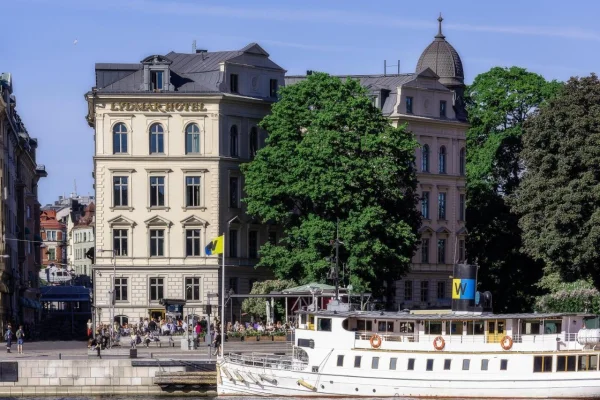
Places to stay near Djurgårdsvägen 60

Gudars skymning
Historiska museet
Striden om verklighetsuppfattningen
Armémuseum
Arkivens dag: Fredsarkivet
Armémuseum

Olivia Rodrigo – The Unraveled Tour
Avicii Arena
Torka aldrig tårar utan handskar
Göta Lejon

Deep Purple
Avicii Arena

J. Cole – The Fall-Off Tour
Avicii Arena